
 image du cours HCC-min.png
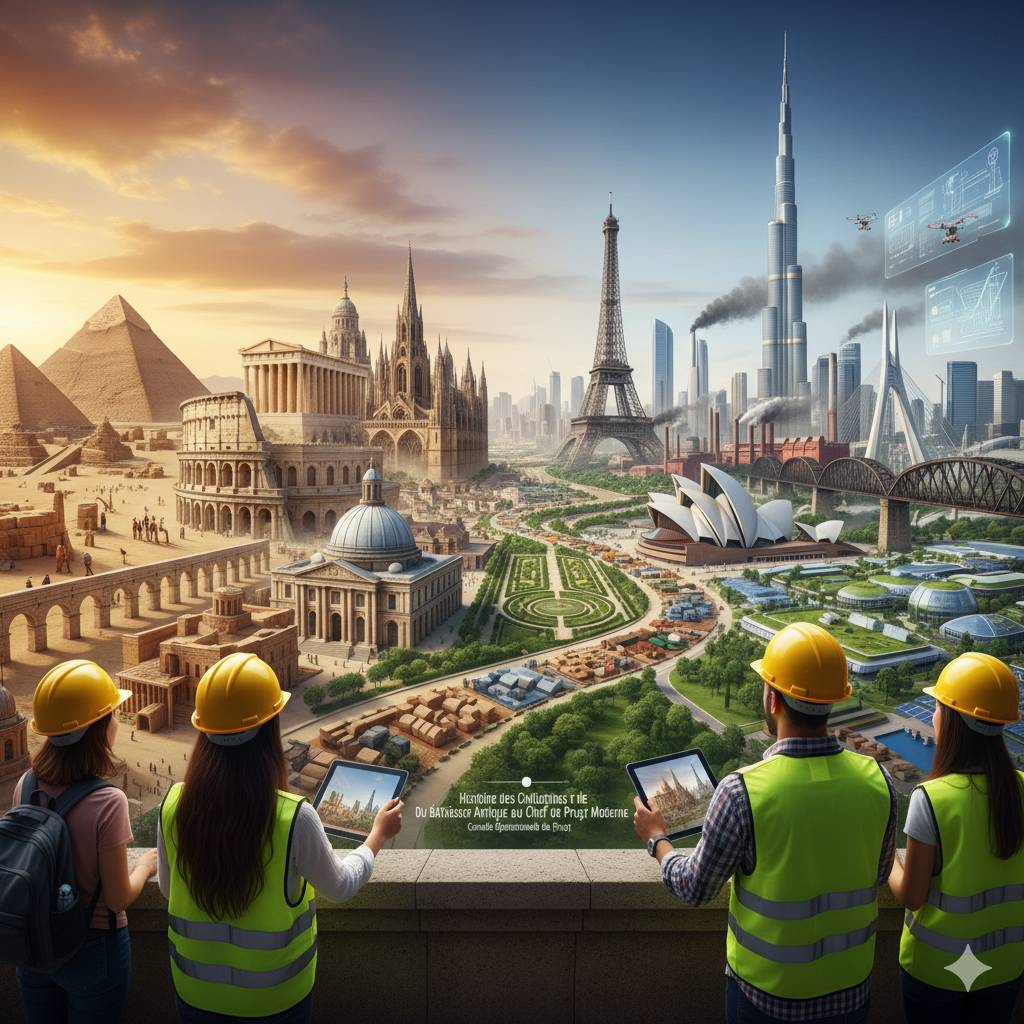
This course presents a historical and critical examination of architectural and urban transformations in Europe from the sixteenth to the twentieth century, analyzing their profound repercussions throughout the Arab and Muslim world, with particular emphasis on North Africa and Algeria. The primary objective is to comprehend how built forms reflect the sociocultural, technological, and political metamorphoses of each epoch, tracing an intellectual trajectory from Renaissance humanism and the revival of classical antiquity, through postmodern experimentations, encompassing the emergence of Baroque architecture in service of the Counter-Reformation, the industrial revolution with its revolutionary materials (iron, glass, concrete) and unprecedented building typologies (railway stations, covered markets, department stores), culminating in the advent of Haussmannian urbanism that fundamentally reconceptualized modern city planning. The course particularly scrutinizes the mechanisms of architectural transfer to Maghrebi colonial territories: from the transplantation of European urban models (orthogonal grids, Haussmannian boulevards) to the emergence of the neo-Moorish style as an orientalist expression of colonial authority, subsequently examining Fernand Pouillon's remarkable achievements that masterfully conjugated social modernism with climatic adaptation. The postcolonial period is analyzed through the lens of Algeria's quest for national architectural identity, oscillating between international modernism, traditional Islamic references, and critical reappropriation of colonial heritage. This historical approach enables future practitioners in project management to develop a contextual architectural literacy, integrating cultural, environmental, and patrimonial dimensions into their forthcoming projects. The curriculum articulates European and Maghrebi case studies, urban morphological analyses, and reflections on contemporary sustainability and architectural identity challenges, thereby providing a robust foundation for understanding the complex legacies that continue to structure Mediterranean architectural production today.
- Teacher: BOUMALI BADREDDINE